
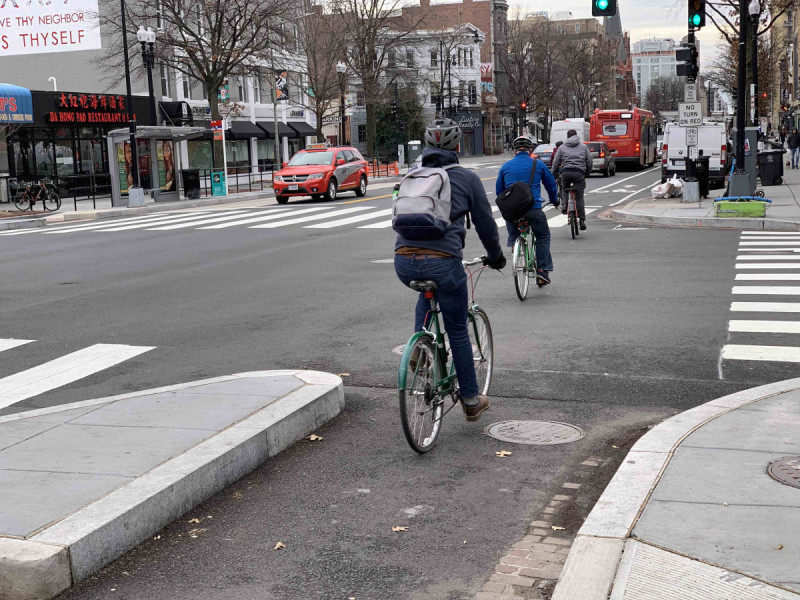
Commission urges expedited completion, clear prioritization of Ward 1 corridors, and regular public reporting as DDOT develops its FY2026–FY2030 work plan.
WASHINGTON — Advisory Neighborhood Commission 1E (ANC 1E) has formally expressed its support for the District Department of Transportation’s Strategic Bikeway Plan and outlined specific Ward 1 corridors the Commission believes should be prioritized within the plan’s implementation framework.
At its January 28, 2026 public meeting, ANC 1E unanimously adopted a resolution supporting the Strategic Bikeway Plan and urging DDOT to complete the plan expeditiously and prioritize implementation of its recommendations. The Strategic Bikeway Plan will guide how DDOT updates the District’s bicycle priority network and establish criteria for prioritizing future bikeway expansion, completion, and strengthening for Fiscal Years 2026 through 2030.
“The next five years of bikeway decisions will shape how people move through our city. We supported this plan because it sets the rules for those decisions, and we want those rules applied in a way that makes our streets safer and more connected,” said Josh Jacobson, chair of ANC 1E. “Additionally, Ward 1 residents deserve to see their streets reflected in the city’s work plan, and we’ll continue to make sure ANC 1E priorities aren’t ignored.”
In its resolution, ANC 1E specifically elevated the following Ward 1 corridors for prioritized consideration:
- 11th Street NW
- Kenyon Street / Irving Street Crosstown connection
- Harvard Street NW
- Euclid Street NW
The resolution further calls for DDOT to accelerate delivery of protected bike lane projects consistent with District goals, plan for sufficient micromobility parking near heavily trafficked bikeways, and provide regular public updates on implementation progress and safety outcomes.
Resolution Text:
Resolution #1E-2026-0101: Supporting DDOT’s Strategic Bikeway Plan
###
###
About ANC 1E:
Advisory Neighborhood Commission 1E represents the neighborhoods of Pleasant Plains, Park View, and the Howard University area. Commissioners are elected to advise the District government on decisions that affect their neighborhoods, including public safety, transportation, planning, zoning, and city services. All ANC meetings are open to the public, and residents are encouraged to participate in shaping the future of their community.
About Advisory Neighborhood Commissions:
ANCs are nonpartisan, locally elected bodies in Washington, D.C., that represent neighborhood interests to the District government. While ANCs do not have legislative power, they are given “great weight” on decisions before city agencies and the Council. Commissioners serve two-year terms and are elected by single-member districts within each ward.
 ANC 1E